vrijdag 9 mei 2014

Closing blog

Hello everyone!

We are sad to say that our trip is finished and so is our blog. We have seen a lot of countries and experienced many different things.  Beside the interesting business partners that we found and the deals that we closed, we also took enough time to discover the culture, economy, history,... of the different countries and cities that we visited. We must say that it was an interesting journey, one we will never forget!


Naomi, Thomas, Ulrike and Delphine

Duba, Saudi-Arabia

Duba is our very last stop of our trip. It is a small city in Saudi-Arabia on the northern Red Sea and is in Tabuk Privince. This city is described as “The Pearl of the Red Sea” by local citizens. We took the plane in Medina to Tabuk. Then, we took a taxi to Duba. It took us 4 hours to reach Duba.

We decided to rest a bit and not to visit a lot of monuments and so on. Because there is no local public transport, we were obliged to rent a car of go with a taxi. Saudi-Arabia is the world’s main oil exporting country so we thought it was interesting to visit a port in Duba. The country has also the largest and most diversified economy in the Middle East with industrial exports that are internationally oriented. All ports in Saudi-Arabia are fully managed and operated on a commercial basis by the private sector.

We visited the port of Dhiba. The port is located at the north and of the Red Sea coast. It is a natural harbour and is protected by hills on all three sides. It is also very small and is a coastal breakwater. It is the nearest port to the Suez Canal and other Egyptian ports. It is developed to serve the northwest region of the Kingdom. There is also a hotel, supermarket and bank under construction inside the Port Area.

The rest of the day we were on the beach and we also went shopping for an hour because Thomas does not like shopping that much.  

When it was time to go home, we had to go back to the airport of Tabuk. We travelled 3 hours with our taxi. Then we took the plane to Zaventem. We had to fly for about 15 hours. Because it was such a long flight, we slept on the plane during the flight so we were not so tired when we arrived in Brussels. Then, we took a taxi to go home.

Personally, I had a great time traveling from East-Timor to Saudi-Arabia. I do not have a favourite country because every country has something special.
Dhiba Port
Delphine

maandag 5 mei 2014

Medina Saudi Arabia


Masjid an-Nabi

To end this amazing journey we hit the road heading Saudi Arabia, we saved best for last and have chosen Medina to be the first city to visit in this great country . To be honest we were all very exhausted but we collected all our energy to admire and explore this last country on our list. It is better to take the plane to fly from Bagdad to Medina, the flight lasted 6 hours. Finally arrived at the airport the excursion could begin, we were all very enthusiastic and expected a lot of our last trip.  There are so many places to visit so it was hard to make a selection. A must-see is Masjid an-Nabi, this mosque is often ranked number 1  and is truly beautiful. We were all impressed by the beauty especially Ulrike who was stunned by the architecture. 

To learn something more about the history  of Medina we visited Madain Saleh Tombs, I definitely recommend thise site if you are into archaeology. It is really interesting to explore this historical site, if you have the chance to hire a guide who can tell you the history behind these tombs, do not hesitate! We had the luck that Thomas our personal history freak knew a lot of the tombs’ origins. After another great day we thought we deserved a top-class diner to end the day. 
During our restaurant-hunting we saw a lot of different specialties from steak to typical local dishes. We decided to go for Mexican food  in Saudi Arabia a real culture mix. Tako hut is a very nice restaurant, the food is great and the service is excellent.
 To spend the night we have chosen the bed & breakfast ‘Sofaraa al Huda’, to be honest hygiene is not their strongest trump but we survived. Unfortunately again another day that passed by rapidly and our journey has almost come to an end. 
Madain Saleh Tombs 


Naomi H.

http://saudi-archaeology.com/sites/madain-saleh/

zondag 4 mei 2014

Riyadh - Saudi-Arabia

While still feeling bad from the many cocktails that I tried out in Iraq, we arrived at the King Khaled Airport in Riyadh, for our last stop: Saudi-Arabia. Riyadh Looks and feels just like any metropolis in the world. It’s a bustling town full of skyscrapers, lights and busy traffic. The most surprising thing is that it is located right in the middle of the desert , which isn’t something you notice when you are in the city centre. Although we’ve already visited many cities in the middle east, the heat is hardest to handle in Riyadh, my god !

The thing about Riyadh is that there isn’t really a lot of entertainment around, It’s a very business oriented city which houses the core of the oil business in the country, which is the main export and most important part of the economy. This exuberant wealth that was achieved in the latter half of the 20th century, is evident when you walk along; luxurious hotels, grand plaza’s and squares and state of the art skyscrapers and office buildings built in the latest architecture. Perhaps the most interesting thing to visit is the National Museum which displays various collections which cover anything from fossils and bones to ancient sculptures and anything related to Islam and the founding of the kingdom.


The Saudi’s are often skeptical and suspicious towards westerners, and especially women. The country is well known around the world for their intolerance to women rights and secular things like the use of alcohol. We often had people looking at us in an unfriendly way because of the way the girls were dressed. It’s often forbidden for women to enter certain buildings and places when they’re not dressed in traditional and especially Islamic attire. The best way to enjoy ourselves in Riyadh was in the hotel where you could get some cocktails, if you insisted long enough. Let’s see what our next stop in the Arabian kingdom brings !

Thomas


dinsdag 29 april 2014

Erbil, Iraq

Our world tour has almost come to an end but before thinking about that we still have to explore some cities, Erbil in Iraq for example. Like in Afghanistan and Iran is the political situation unstable and dangerous, therefore the advice is given to visit Iraq only when necessary . As we are all very adventurous we took the risk and continued our trip.
The city's history goes way back to 6000 BC and is said to be one of the oldest continuously inhabited cities in the world. When you visit the city center the most striking building is the citadel situated near to Erbil-Kurdistan square. The square is lovely to stroll around and enjoy the historic buildings.  Noteworthy is that the locals are so helpful and friendly, before you know it you are drinking tea with their whole family. Although they try to upgrade the image of the city by large-scale estate projects. Visiting the citadel and its surroundings takes a lot of your time because it is a large area but it is definitely worth it. We have spend almost the whole day at the square and the citadel. What I found irritating is that several salesmen were very intrusive, moreover ladies always keep your purse nearby. All the shops and facilities are situated close together so renting a car is not necessary, the city is very accessible on foot.
In my opinion you should visit the city around March and April because of the nice temperatures and sunny days. It is not too hot or too cold mostly it is 30 degrees in the shadow of course. 
When you like having a drink with your friends in a trendy café, the lagoon bar is the place to be. I think Thomas had some difficulties to get up the next morning, he enthusiastically started to discover the local cocktails.

Naomi H.


maandag 28 april 2014

Iraq - Baghdad


We have travelled for many weeks now and honestly, this trip has been the best experience in my life so far. We’ve seen the most beautiful places, discovered a wonderful nature and met amazing people. This is the last time I’ll write about our trip but I highly recommend you to also read the adventures of my colleagues who write here regularly as well. 

After Iran, we went to Iraq and more specifically to the capital Baghdad. We were extremely cautious because the travel agents advised us not to go to the country at all. It’s very dangerous to travel to Iraq because the people from the Middle East don’t like people from the West or anyone who helped the West invade the country. You could easily be kidnapped or car jacked. Consequently, Iraq was not my absolute favourite. 

So why did we take the risk?  It’s simple: Iraq has an interesting culture and history. Many people don’t realise this because the city is always associated with war and cruelty. Therefore, I’m glad that I can give you another view on the country and its capital. 

When we arrived in Baghdad, we first went to the International Zone where we bought DVD’s, a rug and even ate a Big Mac at McDonalds. As you see, some parts of Iraq are accessible ! Afterwards, we visited two buildings that reflected the history of Baghdad. In the Iraq Museum, we saw man-made artefacts that represented the different cultures in Iraq, for example the Babylonian and Islamic culture. It had the most important collections in the world. I didn’t think that such impressive buildings were to be found in Iraq… In the National Museum of Modern Art we saw beautiful paintings, sculptures, and ceramics made by talented Iraqi artists. Unfortunately, many of these museums objects are lost because of the Iraq War. Then we walked through the Al-Safateer market. There we saw exhibits and nice copper objects, for example tea accessories. This market really reflected the culture and economy of Baghdad. Lastly, we saw a performance in the National Theatre of Iraq. It was wonderful! Baghdad has a fantastic recreational culture. 

Al-Safateer Market

I hope you all enjoyed reading my blog. One little hint for all the travellers among us: keep your eyes open because the world has so much to offer, even when you’re least expecting it! 

Ulrike

Sources:
http://www.britannica.com/EBchecked/topic/48773/Baghdad/24883/Cultural-life
http://www.iraqiembassy.us/page/art-and-culture
http://www.theiraqmuseum.com/
http://www.baghdad-travel.net/
http://www.iraq-tourism.net/safe-to-travel-to-iraq.html

zondag 27 april 2014

Qum, Iran

Our next and last city in Iran that we wanted to visit is Qum. It is the smallest province in Iran. Previously, it was a district that belonged to the state of Arāk, and then was it attached to the capital city, Tehran. Then it became an independent province. It is a agricultural, industrial and commercial city.

Qum is well known for its religious seminaries and institutes, which offer advanced religious studies. The Hawzah consist over 200 education and research centers and organizations.it has over 40,000 scholars and students spread over 80 countries on the world.
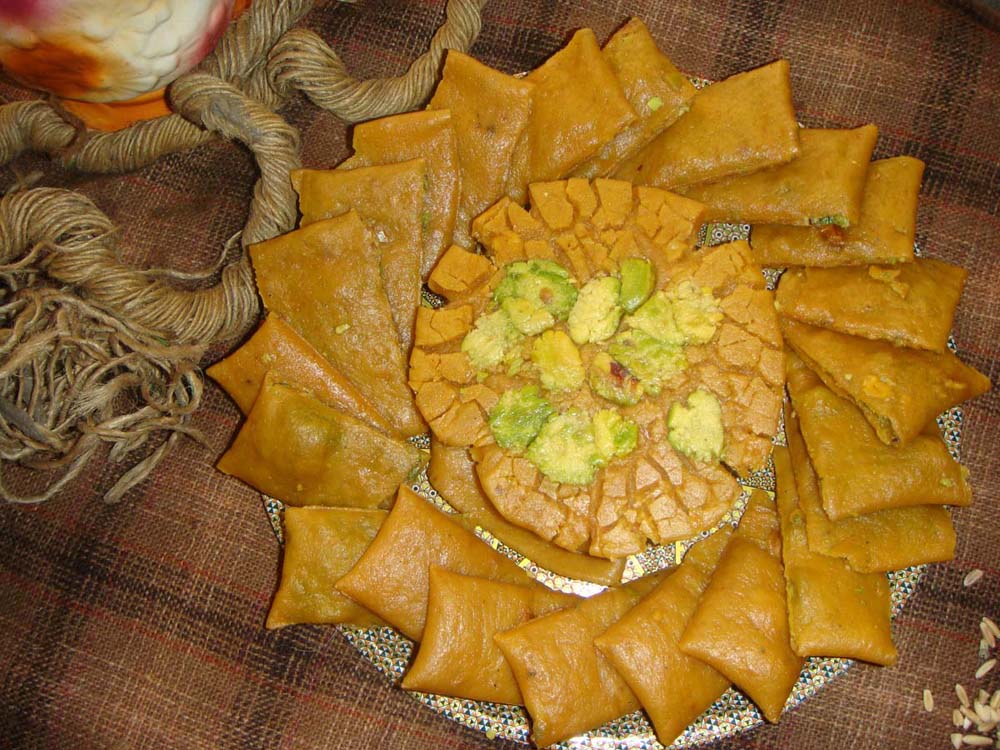
Sohan

Qum has many carpet and sweet shops. The city is well known for the unique and beautiful silk rugs that are also famous worldwide. It is also famous for its “Sohan”. This is a flat sweet biscuit made of pistachios and saffron. Also “Gaz” is well known, this is a nougat sweet. We tried this and personally, I found this delicious. There are also numerous religious shops which sell religious that sell religious books and versions of the Koran.

We also visited some places of interest in Qum.
First, we visited a museum called “the Āstāne Museum”. It contains the gifts and bequests that have made to Lady Fatima Masuma by various well wishers.


We took the taxi and visited a mosque, namely the Masjid-e Jamkarān. It was built in 393 by Hassan Bin Maslah in order of Imam Madi. It is believed that Holy Imam himself visits the mosque every Tuesday night because several thousands Shia pilgrims converge here on that day. It is a important center for Shia Muslims, who are followers of the Twelve Imams. The Islamic dress code is strictly enforced in Iran and also in Masjid-e Jamkarān. Women wear trench coats with trousers and cover their heads with headscarves. A chador is a must when you enter religious places and men are not allowed to wear shorts.
Masjid-e Jamkarān
Delphine